
Automatic Transfer Switch (ATS) Manufacturer
GEYA’s mission is to improve people’s lives and the environment quality by utilising power supply management technologies and services.
Our company’s vision is to provide competitive products and services in the fields of home automation, industrial automation, and energy management.
GEYA Featured Automatic Transfer Switch


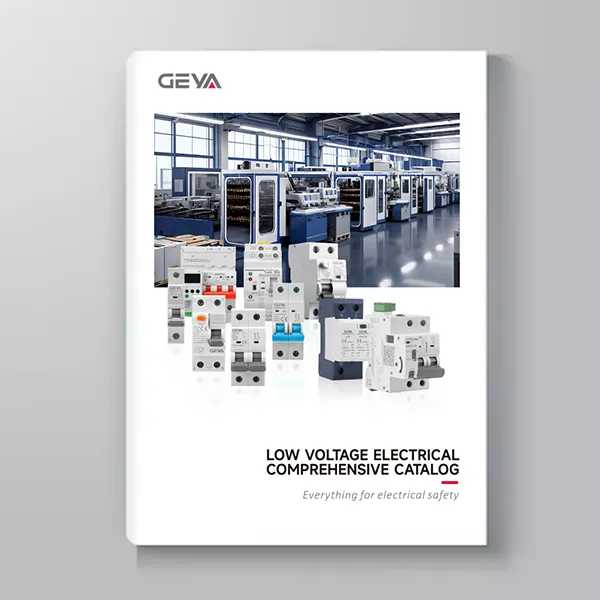
Download GEYA Automatic Transfer Switch Catalog PDF
Automatic Transfer Switch (ATS)
- Compact in structure, reliable in transfer, convenient installation and maintenance, and a long life expectancy.
- The size of the product is more compact and meets the different installation requirements of customers.
- Ensure the continuity, reliability, and safety of the power supply.
- Widely used in various occasions where continuous power failure is not allowed

Automatic Transfer Switch (ATS)
What is ATS?
ATS, or Automatic Transfer Switch, is an intelligent power switching device whose main function automatically switches loads to a backup power source when the main power source is interrupted, ensuring the uninterrupted operation of critical equipment and systems.
How does an Automatic Transfer Switch(ATS) Work?
An automatic transfer switch (ATS) is a self-acting, intelligent power-switching device governed by dedicated control logic. The main function of an ATS is to ensure that electric power is delivered continuously from one of two power sources to a connected load circuit (electrical equipment such as lights, motors, computers, and so on).
The control logic, also known as an automatic controller, is usually microprocessor-based and continuously tracks primary and backup power sources’ electrical parameters (voltage, frequency). The ATS will automatically pass (switch) the load circuit to the other power source (if one is available) if the connected power source fails. Most automatic transfer switches, by default, seek connection to the primary power source (utility). They can only connect to a backup power source engine generator, backup utility) when it is necessary (primary source failure) or requested (operator command).
Automatic Transfer Switch(ATS) Working Principle
An ATS can control when a backup generator depends on the voltage within the primary supply for a building. They must also pass the load to the backup generator after that. They work by preventing the backup generator from being an electric power source before the backup generator is turned on for temporary power.
One example of a step-by-step process an ATS may use is:
(1)When the electric power in a building goes out, the ATS starts the backup generator. This causes the generator to ready itself to provide electric power to the house.
(2)When the generator is prepared to perform, the ATS switches the emergency power to the load.
(3)The ATS then commands the generator to shut down when the utility power is restored.
When power fails, the automatic transfer switch commands the generator to start. When the generator is prepared to provide power, the ATS switches emergency power to the load. Once utility power is restored, ATS switches to utility power and commands generator shutdown.
If your house had an ATS that controlled a backup generator, the ATS would start the generator when a power outage occurred. Therefore the backup generator would begin to provide power. Engineers generally design houses and transfer switches such that the generator remains independent from the system that distributes power throughout the building. This protects the generator from overloading. Another protective measure that engineers use is that they need “cool down” times to forestall the generator from overheating.
ATS designs sometimes allow for load shedding or changing the priority of other circuits. This enables the electricity and power to circulate in ways that are more optimal or useful for the needs of the building. These options can come in handy to forestall generators, motor controller circuit boards, and other components from overheating or overloading with electricity.
Soft loading could be a method that lets the load transfer from the utility to the synchronized generators more efficiently, which may also minimize voltage loss during these transfers.
Automatic Transfer Switch(ATS)
Low-voltage automatic transfer switch assemblies provide a reliable means of transferring essential load connections between primary and alternate electric power sources. Data centers, hospitals, factories, and a good range of other facility types that need continuous or near-continuous uptime typically utilize an emergency (alternate) power source like a generator or a backup utility feed when their regular (primary) power source becomes unavailable.
ATS Applications: Where Reliability is Non-Negotiable
ATS systems are essential in a variety of situations where continuous power is critical. Here are some key examples:
Data Centers: Data centers demand 24/7 uptime. ATS systems guarantee the uninterrupted operation of servers and network equipment by seamlessly switching to a backup power source (like a generator) during grid outages.
Healthcare Facilities: Operating rooms, ICUs, and other critical care areas in hospitals rely on continuous power. ATS systems ensure the functionality of life-saving medical equipment, preventing potentially life-threatening situations during power outages.
Financial Institutions: Banks, stock exchanges, and other financial institutions require constant power for their transaction systems. ATS systems prevent financial losses and disruptions by providing immediate backup power in case of grid failures.
Industrial Manufacturing: Many industrial processes, such as those in the chemical, metallurgical, and manufacturing sectors, rely on a continuous power supply. ATS systems ensure uninterrupted production, preventing accidents, product loss, and costly downtime.
Critical Infrastructure: Airports, subways, telecommunications towers, and other critical infrastructures depend on continuous power for public safety and societal function. ATS systems enhance the reliability and safety of these essential services.
Residential Homes: For homeowners with backup generators, ATS systems provide a seamless and automatic transition between grid power and generator power, enhancing the reliability of household electricity.
Generator Automatic Transfer Switch(ATS) Installation
Power stations use enclosed circuit breakers similar to houses for user needs. Research or equipment that places confidence in continuous power uses Automatic Transfer Switches in additional complicated arrangements to satisfy their unique needs. The generator automatic switch installation process must use these arrangements to meet the individual needs of households and buildings.
Electrical engineers can create these designs for the facilities themselves and make control rooms for their different purposes, like in hospitals or data centers. These could even be utilized in emergency lights that point individuals to exits when necessary, hazardous ventilation to get rid of toxic chemicals from rooms, and even alarms when monitoring facilities for fires.
The way these automatic switch designs work can involve alarms that signal powerlessness. This commands the automatic transfer switches to start up the backup generators. After detecting that they’ve started, the setups distribute power across the building when designing the generator automatic transfer switch installation.
Automatic Transfer Switch(ATS) for Generator
The complete automatic transfer switch monitors incoming voltage from the utility line around the clock.
When utility power is interrupted, the automatic transfer switch immediately senses the matter and signals the generator to start.
Once the generator is running at the proper speed, the automatic transfer switch safely shuts off the utility line and simultaneously opens the generator power line from the generator.
Within seconds, your generator system begins supplying electricity to the critical emergency circuits of your home or business. The transfer switch continues to watch the utility line conditions.
When the automatic transfer switch senses the utility line voltage has returned to a steady state, it re-transfers the electrical load back to the utility line and resumes monitoring for subsequent utility loss. The generator will still run for an engine cool-down period of several minutes while the whole system stands ready for the next power outage.
Interlock vs Automatic Transfer Switch
These two devices work the same. However, their operability is different. Their applications are also various. An automatic switch is mainly commercial and in those vast apartments with an interlock being used in residential applications and places with less frequent power outages. You need an automatic switch if you prefer having a fully automated system requiring no supervision. It’s also ideal for commercial or industrial applications needing continuous power. You need one of these devices in your home if you have a backup power generator. It’s also a requirement for any commercial building to have backup power with a transfer switch.
Frequently Asked Questions (FAQs) about ATS Systems
Here are answers to some common questions about ATS systems:
Q: What maintenance should be performed on an ATS system?
A: Regular ATS maintenance includes:
- Inspecting mechanical components like contactors and relays for smooth and reliable operation.
- Cleaning the internal circuitry and wiring terminals to prevent dust and debris buildup.
- Testing the automatic transfer functionality by simulating a power outage to ensure timely and accurate switching to the backup source.
- Maintaining detailed logs of ATS operations, including the time, date, and reason for each automatic transfer, to facilitate troubleshooting and proactive maintenance.
Q: What factors should be considered when selecting an ATS system?
A: Key factors in ATS selection include:
- Load Type: Different loads have varying power requirements. For instance, motor loads have high starting currents, necessitating a higher capacity ATS.
- Transfer Time: The required transfer time varies depending on the application. Data centers require millisecond-level switching, while less critical loads can tolerate slightly longer transfer times.
- Functionality: Consider additional features like current monitoring and remote control based on specific needs.
Q: What is the difference between an ATS and a manual transfer switch?
A: The key difference lies in automation. ATS systems automatically detect power outages and switch sources, while manual transfer switches require human intervention. ATS systems offer enhanced reliability, safety, and faster response times, making them ideal for critical applications requiring continuous power.
GEYA Electrical Equipment Solution

At GEYA, we understand the need to keep all devices safe while making your business competitive. With over ten years of experience, GEYA products are certified CCC, CE, CB, SAA, SEMKO, TUV, and ROSH industry standards.
Additionally, GEYA engineers help clients in choosing the best materials depending on the application. As a leading Residual Current Device (RCD) manufacturer, GEYA adheres to a strict quality electrical process. Feel free to contact us for a custom-made and affordable Residual Current Device (RCD).AA, SEMKO, TUV, Residual Current Device For Solar Inverters, and ROSH industry standards.